
We SEOs are quick to declare things dead. Links are dead, citations are dead, websites are dead, Google is dead, SEO is dead. None of those has assumed room temperature yet. Some of us are also quick to ignore things that often have demonstrable value: a page on a niche topic, a Google Business Profile page in the boonies, a media hit or guest post that didn’t earn you a backlink, another language, and the list goes on.
You know what else is not dead and something you should not dismiss? A review that’s been filtered. That is, a review that a customer wrote and posted online – typically on Google Maps or Yelp – only to be hidden from public view instantly or after a while. Google doesn’t tell you when a review has been filtered. (The reviewer can see it, but nobody else can.) Yelp serves it cold.
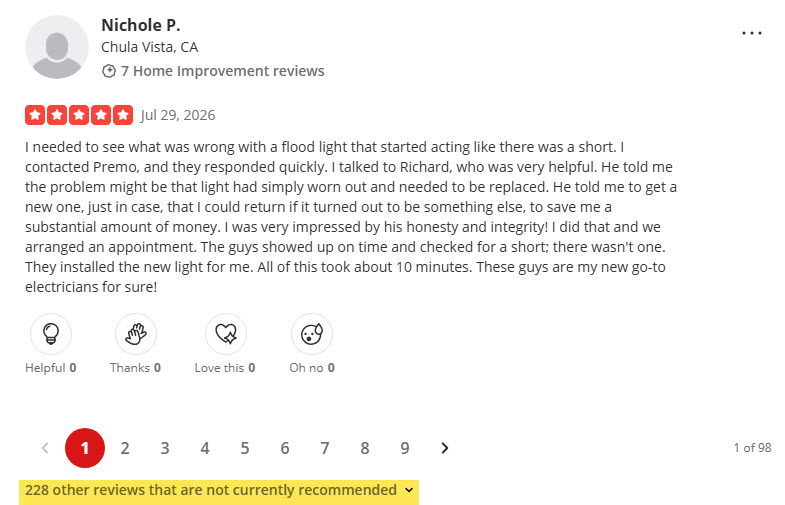
I assume you’re clear on the many benefits of live, not-filtered reviews, and you probably try to get them whenever you can. But nobody likes filtered reviews: not you, not the reviewer, not potential customers, and not even the review sites that filter the reviews (Google Maps and Yelp). The only filtered reviews you like are the ones for that slimy competitor down the street, who must be greasing customers. Karma.
On the surface that makes sense: What good is a customer’s good word if nobody else sees or hears it? But you need to look deeper than that. A filtered review isn’t a failure, because of all of the things that had to go right for you to get it, including acquiring the customer, doing a good job for the customer, and having the customer take the time to review you. It’s just one wrong turn at the end of a much-longer journey you took with that customer. Turns out you can get back onto the right road and get to your destination, sooner or later. Getting a review isn’t the process by itself, but rather is part of a larger process.
At the risk of slowing you down with another metaphor, here’s another way you can look at it: A powerlifter tries to deadlift 585 lbs., which would be a personal best. He pulls up the bar most of the way, but can’t quite lock it out. He rests for a few minutes, loads up 580 lbs., and tries again. This time he does pull it up all the way, and even squeezes out one more rep. It’s 5 lbs. under his goal, but 580 is still a personal best. He also got a great workout and maybe learned a thing or two from the attempt. Now he’s better able to clear 585 next time.
So why exactly should you keep asking for reviews, even if a lot of them are getting filtered? Because of the many layers of payoff between your current situation and when the filter becomes a non-issue for you. Here are the main ways filtered reviews can help you get your local SEO and overall marketing more locked-in:
1. You can copy and paste the review and use it as a testimonial on your site. I suggest you do so regardless of whether the review was filtered. It’s relevant and persuasive content you don’t need to write, and customers, Google, and the AI chatbots will see it and factor it in.
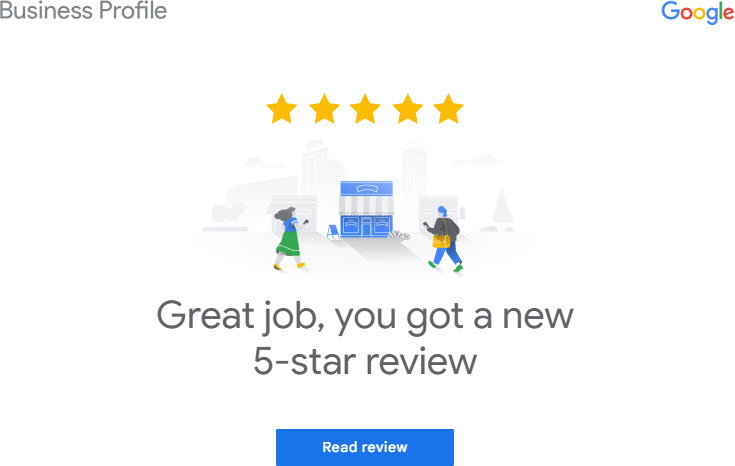
By the way, if it’s a Google Maps review, you can still provide a link that allows anyone to read the review, even if it was filtered or might be filtered in the future. (This is a good step to do because, for one thing, it shows skeptical would-be customers that you didn’t just make up the review.) Simply copy the link in the notification that Google sent you when your customer posted the review, or pull up the review in your Google Business Profile dashboard. Somewhere next to the review, include a link to that URL.
2. You may be able to grab or ask for the photos your customers uploaded, if they included photos with their review. You can optimize those photos and stick them on your site.
3. You can probably get the same review on another site. If appropriate, nudge your reviewer to a site where you have few reviews (BBB, HealthGrades, Avvo, etc.), perhaps because you’ve overlooked or neglected that review site. You want reviews on a diversity of sites anyway, particularly now, in the AI era. Also, as I’ve written, customers who reviewed you on Google Maps and who have written at least a few reviews on Yelp are the most likely people to review you on Yelp.
4. You get to sniff out your customer’s sentiment before it’s public. If the review wouldn’t have done you any favors, the filter just did you a favor. That’s often the case with one-liners, ratings without any review text, gibberish, reviews that look forced, and similar unhelpful reviews.
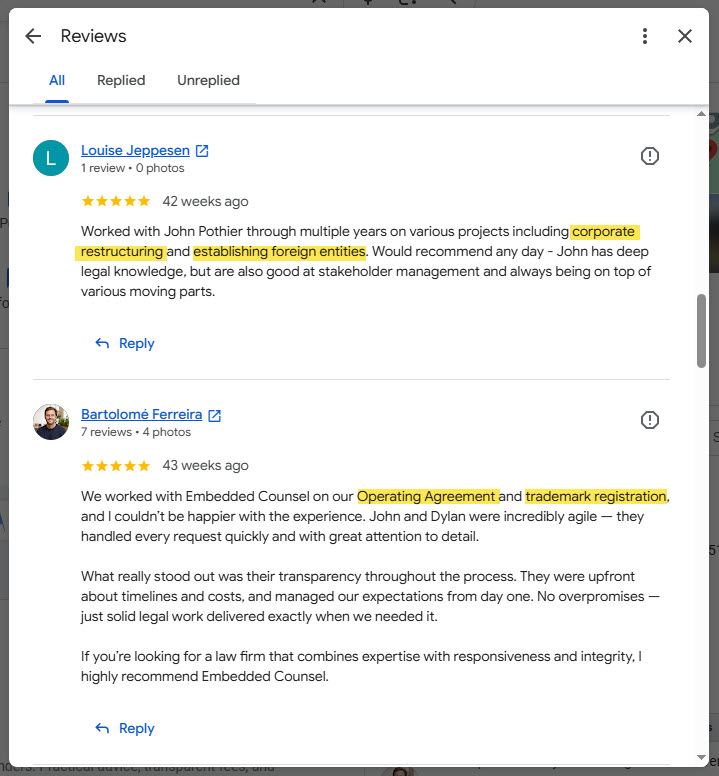
5. It’s excellent keyword-research intel, regardless of whether or when that filtered review sees the light of day. Reviews (yours and other businesses’) are arguably the single best place to find the search terms that actually matter, in that they usually include search terms used by people who paid for what you offer. Those may be terms you’ve ignored, hadn’t encountered, hadn’t thought of, or hadn’t focused on enough.
6. The review may be unfiltered sooner or later, often as a result of your doing absolutely nothing. Just because the review hasn’t seen the light of day doesn’t mean it won’t.
7. You get an early warning. Let’s say you get a review you’re not crazy about, but it’s filtered right away. There’s a decent chance it’s only filtered for a few days, during which time you can figure out whether and how you’d like to respond to the review, whether to contact your customer directly to sort anything out, etc.
8. If your customer is willing to revise the review, it can be an occasion to ask your customer some follow-up questions and glean useful intel about what makes him or her tick (and, by extension, get some insights into other customers and reviewers).
9. You can simplify your review-encouragement strategy if you stop caring so much about filtered reviews. Are you tired of suggesting certain points you want reviewers to touch on, or asking them to use a specific device or app, sending them a direct link to where they can write a review, paying for expensive / ineffective / unwieldy ORM software, or shepherding reviewers in some other way? That might be what’s causing some of your reviews to be filtered in the first place, so you can probably micromanage less and see better results.
10. You refine your strategy. In your effort to send fewer reviews into the meat grinder, you’ll learn more about what works for your business and what doesn’t. If you’re losing a lot of reviews to the filter, it’s a great time to experiment. The single best thing to try, at least for starters, is different timing. Don’t ask lots of customers at once for a review. Spread out your requests. Asking 1 customer every day for 30 days is better than asking 30 customers in a weekend.
11. Filtered reviews keep you frosty and focused, by reminding you that you don’t own anything online besides your website, and that any online asset can go up in a puff of smoke. Now that you know the filter exists and that it can whack you in the face at any time, you may be more consistent in socking away every (good) review you get, in case it ever goes missing. (By the way, a germane pro tip: be sure to copy and paste and store long-term any reviews you get on the Better Business Bureau. BBB removes reviews every 2-3 years, even though the BBB doesn’t filter reviews, to my knowledge.)
12. Customers are more likely to write you reviews if they know you’ll see them no matter what and you’ll use them no matter what. Happy customers are as unhappy as you are when their reviews get filtered, because it seems like a waste of their time. The customer whose review was filtered today might in the future write you a review on another site, or update the original review to be even more glowing – IF you have made it clear that reviewing you was a good use of his or her time.
Are Google’s and Yelp’s review filters a PITA? Yes. Are unfiltered reviews better than filtered reviews? Of course. But the takeaway here is that even filtered reviews have a lot of value. You’ll need to deal with some number of filtered reviews anyway, on your way to getting your review strategy down pat. You’ll get there faster if, rather than trying to avoid filtered reviews at all costs or viewing them as failures, you listen to what those often-ignored reviews are trying to tell you.
What benefits have you gotten out of your filtered reviews? How have you adjusted your strategy based on them? Any immediate problems or concerns? Leave a comment!
OrbitClap delivers customized SEO solutions that help businesses improve their presence in search engine results. With a focus on organic traffic, relevant keywords, and website visibility, our SEO services support businesses in building a stronger digital foundation.
Visit us: https://orbitclap.com/seo-services/